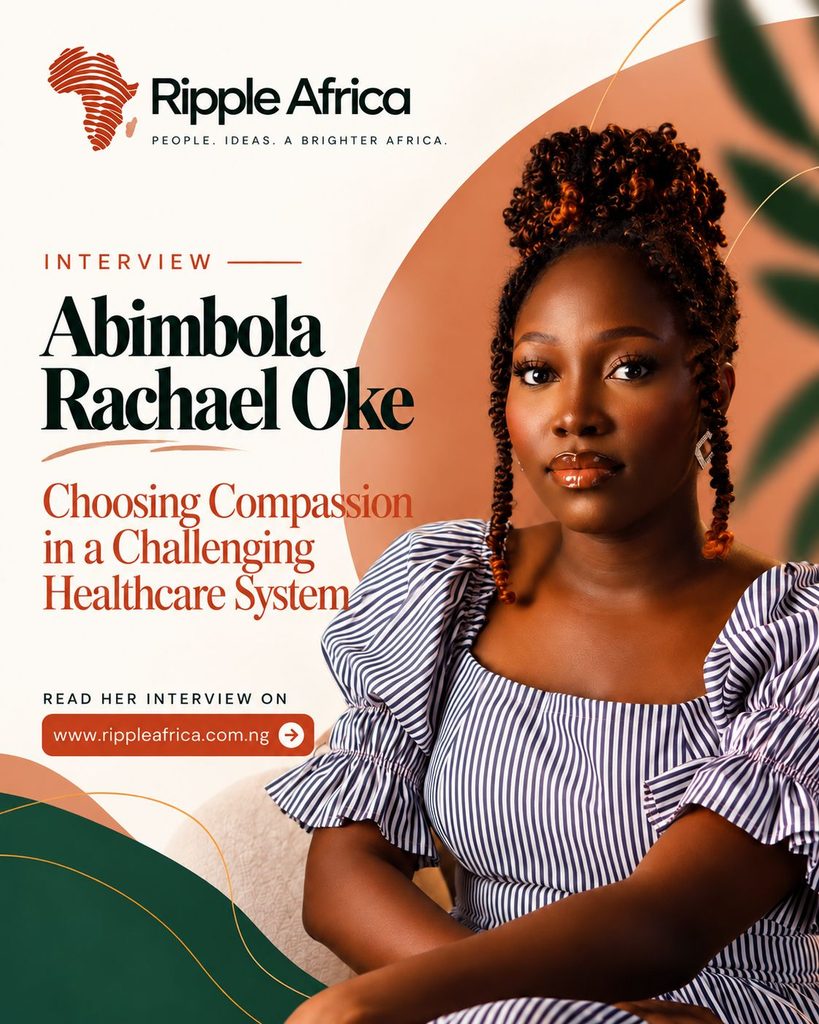
Abimbola Rachael Oke: Choosing Compassion in a Challenging Healthcare System
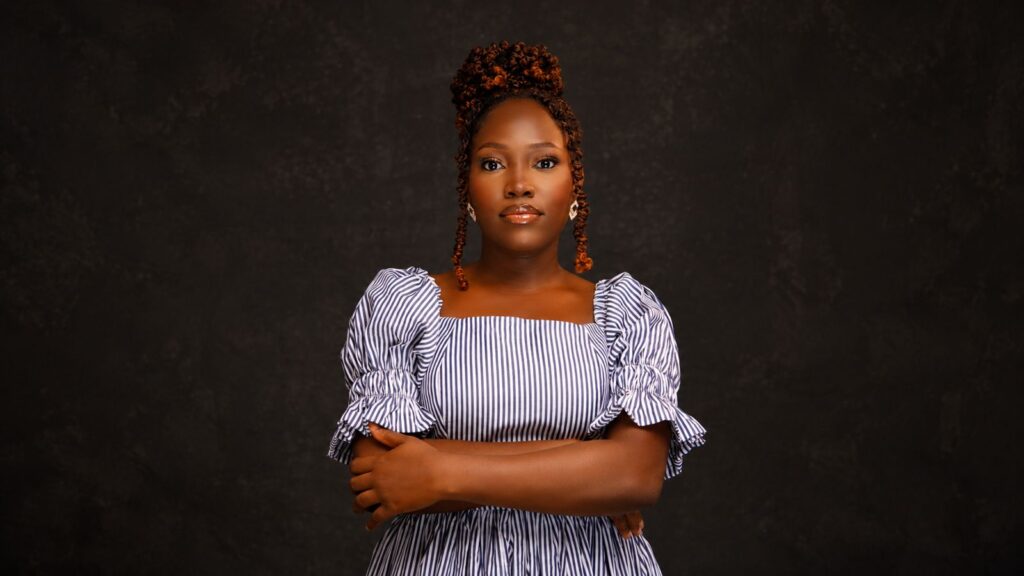
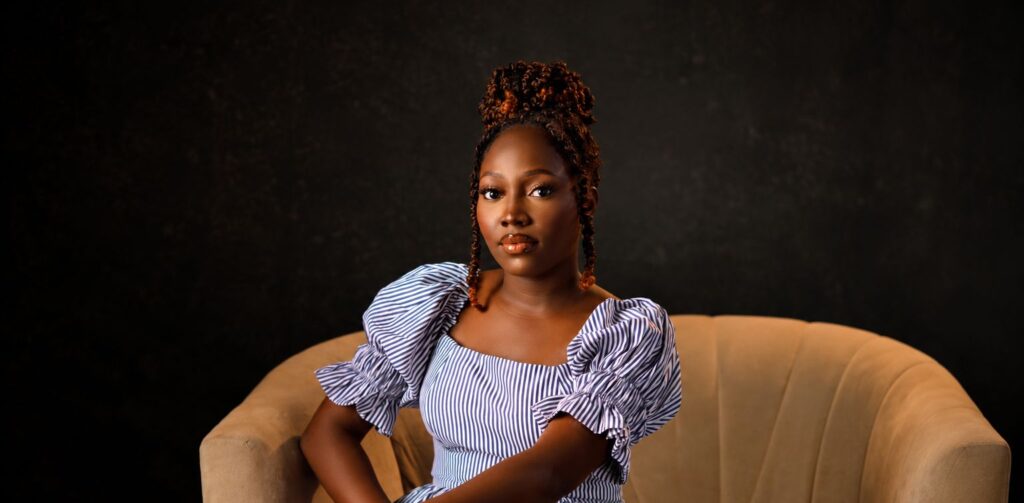
In a profession where compassion, skill, and resilience can make the difference between life and death, Abimbola Rachael Oke is learning what it truly means to care for people. A registered nurse and public health nurse, Abimbola has built her experience across different healthcare settings, caring for patients at different stages of life and witnessing both the fragility of life and the strength of the human spirit.
But beyond the hospital walls, there is a young woman driven by a deep commitment to service, a desire to see people become better versions of themselves, and a vision for a healthcare system where quality care is accessible to everyone, regardless of their social or economic background.
In this conversation with Ripple Africa, Abimbola opens up about the realities of nursing, the emotional weight of losing patients, the importance of compassion in healthcare, and the systems she believes must change. She also shares her personal journey, the role her faith plays in navigating life’s uncertainties, and the advice she would give to younger girls finding their way in life and career.
Her story is a reminder that caring for people goes beyond medical procedures and professional titles. Sometimes, it is about showing up with kindness, choosing to make a difference, and remaining committed to the kind of change you hope to see.
RA: Before we talk about nursing, let’s meet you. Who is Abimbola Rachael Oke beyond her profession? What are your values, what drives you, and what are the things that matter most to you?
I’m a very cheerful person, and I believe that people should always be better than they were before they met me. I want my presence in people’s lives to mean something, no matter how small. My core values are love, kindness, and integrity, and compassion has my heart.
I’m driven by the desire to see people become better versions of themselves. I love to see people grow, discover what they are capable of, and become all they can be. For me, life is not just about what we achieve for ourselves; it’s also about the difference we make in the lives of others.
Community and relationships matter deeply to me. I believe in investing in people and building meaningful relationships because I know how much of a difference genuine care and the right support can make in someone’s life. I want to be someone whose presence leaves people encouraged, supported, and better than they were before.
RA: What inspired you to become a nurse, and how has your journey from studying nursing at Obafemi Awolowo University to working in different hospital settings shaped the person you are today?
Service has my heart. If someone were to ask me what I do for a living, I would say, “I serve humanity for a living.”
My journey into nursing began with curiosity and a constant desire to make people better. But over the years, that curiosity has grown into something much deeper. Nursing school gave me the skills, lessons, and experiences that helped me understand that nursing goes far beyond what many people think it is. I also began to understand the perceptions people have about nurses, particularly in Nigeria, and that made me more conscious of the kind of professional I wanted to become.
Grit and resilience became essential to my journey. They were part of what we were known for at my university, but beyond that, they were qualities I needed to survive and grow through nursing school.
After graduation, I was determined to become the change I wanted to see in the profession. Having witnessed certain things during my training, I knew I wanted to begin my career in an environment where I could learn, grow, and practise nursing the way I believed it should be practised.
Choosing where to begin my professional journey was one of the best decisions I made. My internship year was incredibly fruitful. I experienced what a well-functioning system could look like, and I had a great mentor who gave me a picture of what was possible. Those were some of my best days in the profession because I had the opportunity to practise effectively and grow in an environment that supported good care. The lessons I learnt during that period have stayed with me and continue to shape my work.
As I have moved through other institutions, I have come to understand that the systems around me may not always be in my favour. But I must remain committed to the kind of nurse I want to become. I may not always be able to control my environment, but I can choose to put compassion first and continue to be the change I want to see.
RA: You have worked in critical care, paediatrics, and other areas of patient care. What have these experiences taught you about compassion, human dignity, and the responsibility that comes with caring for another person?
Working in different nursing departments has deepened my appreciation for life in ways I find difficult to fully explain.
Paediatrics helped me see how amazing God’s creation is. It strengthened my resolve to appreciate the preciousness of life and the opportunity every child has to grow. You can never really tell how great a child might become, but you can be a channel through which that child gets the opportunity to discover and fulfil their potential. That understanding has stayed with me.
Critical care, on the other hand, did something different to me. It reminded me of just how fragile life can be. One moment, everything may seem fine, and the next, things can take a completely different turn. It made me think deeply about time and how precious every moment is.
One thought that has stayed with me is the possibility that I could be the last person a patient sees. When I think about that, I am reminded that beyond the treatment I provide, I have an opportunity to make someone’s final moments as comforting as possible. Even when I cannot change the outcome, I can still offer reassurance and the comfort of knowing that someone genuinely cares.
RA: Nursing can be demanding, both physically and emotionally, especially when you’re caring for people during some of the most difficult moments of their lives. What has been one of the biggest challenges you’ve faced in your work, and how have you learnt to navigate it?
Honestly, one of the hardest parts of my work is watching someone die. I don’t think I ever want to become numb to the experience of watching a life slip away, and I hope I never lose that part of me that feels the weight of it.
Losing a patient is one of my greatest challenges. Sometimes, in the first 30 minutes after losing someone, I struggle to process what has happened. Now imagine having a day when you lose more than one patient. Those are some of my toughest days.
Even when I know I have done everything I could, I sometimes find myself questioning what else I could have done differently. It’s difficult to accept that, despite our best efforts, we cannot always change the outcome.
I haven’t entirely figured out how to navigate those moments. What I do is pray. I find myself saying quiet prayers for the family, for the person who has passed, and for the strength to keep going. I believe there is something deeply human about allowing yourself to feel the weight of another person’s loss. I don’t want the demands of my profession to take that away from me.
RA: Working in different healthcare settings has given you different perspectives on patient care. What do you think makes the difference between simply treating a patient and truly providing quality care? What changes would you love to see in Nigeria’s healthcare system?
Working in different healthcare settings has shown me just how important a functional system is to delivering quality care.
A good healthcare system provides professionals with the resources, equipment, and support they need to do their jobs effectively. But when a system is not adequately equipped, healthcare professionals can find themselves doing everything possible to help a patient while working against limitations that are beyond their control. Sometimes, delays caused by these limitations can affect the quality of care a patient receives.
One of the biggest changes I want to see in Nigeria’s healthcare system is greater investment in healthcare facilities. Improving healthcare requires deliberate and sustained investment. If government funding alone cannot meet every need, healthcare facilities should also be supported in accessing grants, partnerships, and other funding opportunities that can help them improve their services.
A well-equipped hospital makes a significant difference. It means healthcare professionals have the supplies they need to care for patients, and it allows for faster and more accurate diagnosis. Ultimately, quality healthcare should not depend on whether a facility happens to have the resources required to provide it. Every patient deserves access to good care, and investing in our healthcare facilities is an important step towards making that possible.
RA: Without sharing any confidential patient information, is there an experience from your work that has stayed with you and changed the way you see people, approach your work, or understand life?
One experience that has stayed with me involved a patient who was afraid to check her weight. She had been trying to lose weight, but she was worried that all her efforts had been in vain. The thought of checking her weight had become a source of anxiety for her.
I encouraged her to go ahead and check it, taking a little extra time to reassure and educate her. When she eventually did, we discovered that she had lost about four kilograms. She was so happy and relieved. I could see her confidence return, and it was beautiful to witness that change.
That experience reminded me of the power of kindness. Something that took only a minute or two of my time helped ease days of doubt and worry for another person.
It reinforced my belief that caring for people goes beyond the clinical procedures we perform or the medications we administer. Sometimes, it is the extra time we spend listening, encouraging, or explaining something that makes a real difference. We may not always realise how much a small act of kindness means to someone, but we should never underestimate its impact.
RA: Beyond nursing, you also have experience in people management, administration, and coordinating operations. How have these different experiences shaped your understanding of leadership, teamwork, and service? How do you see these interests coming together in your future?
As I mentioned earlier, service to humanity is at the core of who I am. I genuinely enjoy serving people, and my different experiences have helped me understand people from different perspectives.
One thing I have learnt is that people often do better when they know better. That understanding has influenced how I approach leadership. I want to be the kind of leader whose example inspires others to grow, improve, and become better versions of themselves.
My experiences outside direct patient care have also helped me appreciate the importance of systems, coordination, and the people who make those systems work. Whether I am providing care, supporting a team, or coordinating operations, I see each responsibility as another opportunity to serve.
Looking ahead, I see these different interests coming together in my aspiration to become a specialist in quality healthcare. I hope to become a consultant who not only provides excellent care but also has a seat at the table where healthcare policies are developed and decisions are made.
I want to contribute to shaping policies and systems that make quality healthcare accessible to everyone. For me, the goal is not just to become better at what I do, but to help create an environment where other healthcare professionals can do their best work and more people can receive the care they deserve.
RA: As a young woman building a career, what pressures or expectations have you had to navigate, and how do you stay grounded in your values while working towards your personal and professional goals?
One of the pressures I currently experience is the unspoken expectation that I should leave Nigeria to pursue better opportunities or work within a more functional system. There are also times when people present unsolicited opportunities in a way that makes it seem as though the path I am currently on is not good enough.
It can be difficult to navigate those expectations, especially when you are trying to build a career and make decisions about your future. But one thing that has kept me grounded is my relationship with God.
I have learnt to trust that I am at the centre of God’s will for my life and that I can be where He wants me to be at each stage of my journey. That understanding helps me remain focused instead of feeling pressured to follow every opportunity or take a path simply because it appears more attractive to others.
I am taking the courses I need for the future I envision, giving my best to the work in front of me, and trusting God to direct my steps. I may not have everything figured out, but I am learning to be faithful with where I am while preparing for where I hope to be.
RA: When you think about the impact you want to make, what does that look like beyond your job title or professional achievements? Are there particular people, communities, or issues you feel drawn to, and how would you like to contribute to them?
It is my desire to see quality healthcare become accessible to people regardless of their social or economic status. I want people to have access not only to healthcare services but also to the knowledge they need to understand and take better care of their health.
I believe that adequate health education is one of the first steps towards quality healthcare. When people understand the basics of their health, they are better equipped to make informed decisions, recognise when something is wrong, and seek the care they need.
For me, the impact I want to make goes beyond caring for individual patients. I want to contribute to a healthcare system where people are better informed, healthcare facilities are adequately equipped, and quality care is not a privilege reserved for a few. I hope to play a role in making that kind of system possible.
RA: If you had the opportunity to sit in a room full of younger girls and talk to them about life, career, and becoming the women they hope to be, what would you want to tell them?
First, I would encourage them to find God and build a relationship with Him. For me, a relationship with the Holy Spirit is an anchor, especially on the days when life feels uncertain or difficult. It gives me the strength to keep moving and the guidance to navigate the different seasons of my life.
I would also encourage them to know themselves. A healthy sense of identity is powerful because it helps you understand who you are and gives you the confidence to become all that you can be. When you know yourself, you are less likely to allow other people’s expectations to determine the direction of your life.
I would tell them to value their community and be intentional about building meaningful relationships. Find good people, invest in them, and be willing to serve and love others. The people you surround yourself with can make a significant difference in your journey, and you also have the opportunity to make a difference in theirs.
Finally, I would tell them to dream as far as they want to go. Don’t limit your dreams to what you can currently afford or what seems possible with the resources you have today. Dream beyond the funds because God can fund it.
No height is too great to attain with God, the right mindset, and a good community. Keep growing, keep preparing, and keep showing up for the things you believe in. You may not have everything you need at the beginning, but that should not stop you from believing that there is more ahead of you.