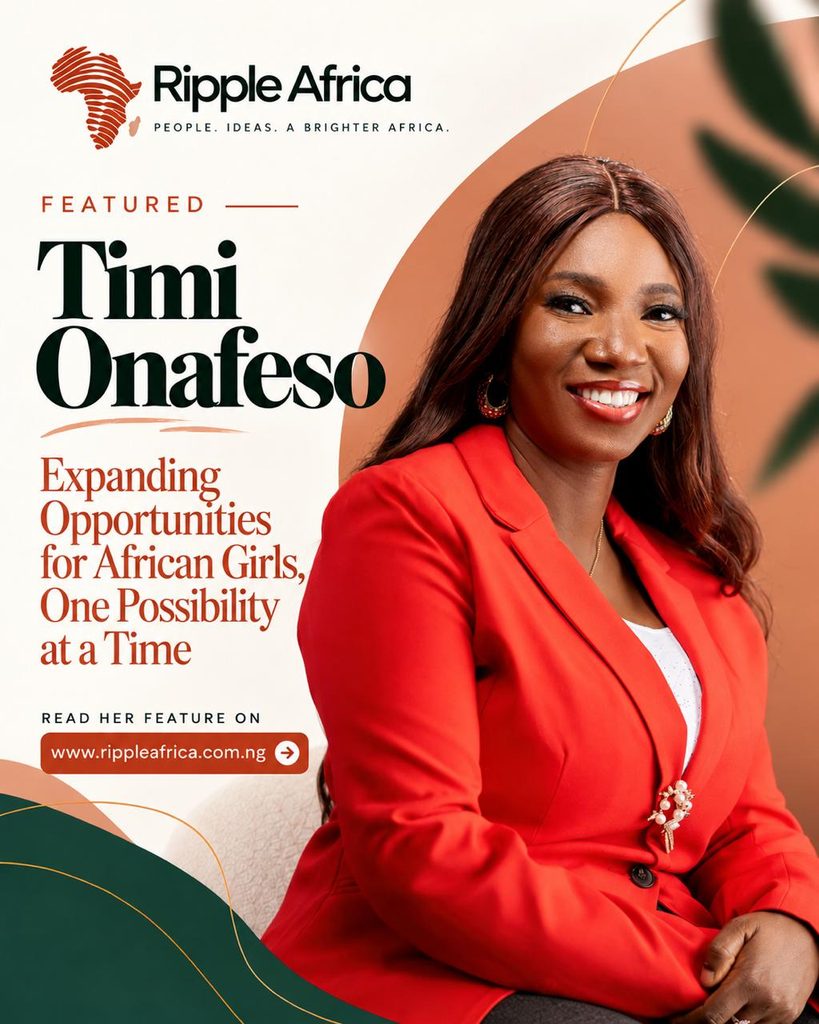
Timi Onafeso: Expanding Opportunities for African Girls, One Possibility at a Time
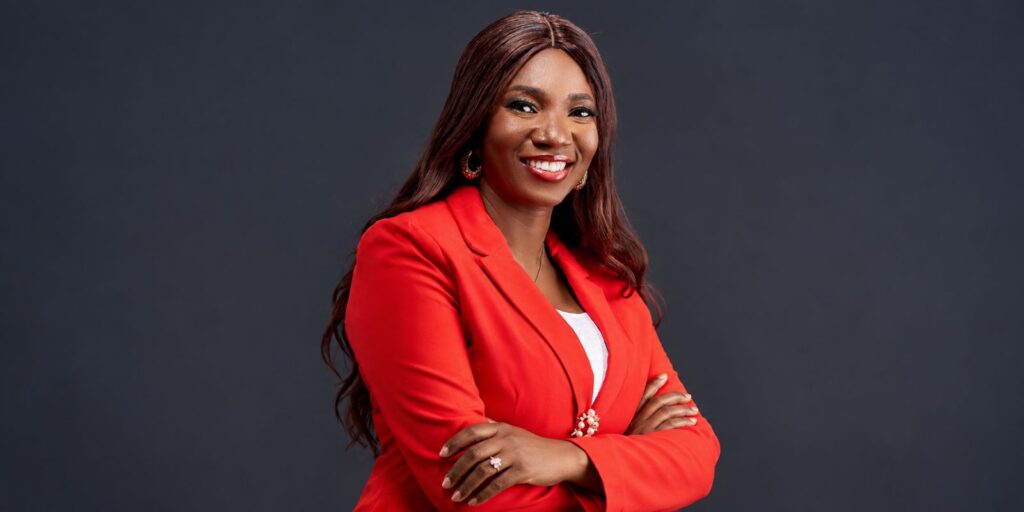
Timi Onafeso’s work has taken her across public health, humanitarian response, education, storytelling and nonprofit leadership. Today, as Executive Director of WAAW Foundation, she leads efforts to increase African girls’ participation in science, technology, engineering and mathematics (STEM).
Looking at these different experiences, I find myself wondering how they all fit together. What connects a young woman supporting children in a refugee camp, a public health educator, a storyteller and a leader working to expand opportunities for girls in STEM?
For me, the thread running through Timi’s journey is opportunity: the opportunity to learn, grow, discover what one can do and, perhaps, become something one had not previously imagined possible.
In 2003, while still an undergraduate, Timi initiated School Without Walls, an educational support initiative for orphaned and vulnerable Liberian children at Oru refugee camp in Ogun State, Nigeria.
I find that detail particularly striking. There is a considerable distance between a university student trying to support children in a refugee camp and an executive director working to expand girls’ participation in STEM across Africa. Yet both efforts speak to a similar concern: what becomes possible when people are given the opportunity to learn and develop their potential?
It also makes me wonder how many possibilities remain out of reach simply because people never get the chance to discover what they can do.
Timi’s work in public health offered another way to think about opportunity. During her National Youth Service Corps (NYSC) year in Imo State, she worked on HIV/AIDS prevention and care, trained peer educators and helped establish health clubs in two secondary schools. Her contribution to community development earned her recognition from the state.
She later joined YEDI, where she coordinated out-of-school programmes and supervised volunteers and programme officers. Her work included supporting a malaria prevention curriculum that used basketball to engage young people.
I like the practicality of that example. Not every important lesson begins with a textbook or a formal lecture. Sometimes, people learn more effectively when education meets them where they are, connects with their interests and gives them a reason to participate.
That approach to reaching people continued through her humanitarian work. During the Ebola outbreak, Timi volunteered as a public health educator in Liberia. The following year, she initiated Spring Africa, an educational support and skills and talent development initiative for internally displaced children across five camps in Abuja.
Her work also took her to India, where she participated in the Kanthari leadership programme and volunteered with Visthar International in Bangalore. There, she facilitated sexual and reproductive health training for orphaned and vulnerable Dalit girls and taught English to young people between the ages of 13 and 18.
Across these experiences, I see someone exploring different ways to make learning and growth accessible to people whose circumstances might otherwise limit their opportunities. The settings changed, the people she worked with changed, and the needs were different. But the question of what people could become when given the right support remained relevant.
Timi’s interest in personal growth also found expression beyond her humanitarian and development work. Through her personal brand, Timi Springs, she explored conversations around purpose and personal development. Her radio programme, The Timi Springs Show, featured leaders and other guests, while her book, The Journey to Forever, explored the process of discovering purpose.
I find this part of her journey interesting because helping people develop is not only about giving them access to education, skills or resources. It can also mean helping them ask questions about themselves: what matters to them, what they are good at, where their abilities might lead and what kind of life they want to build.
Storytelling and writing offer another way to engage those questions. They create room for people to reflect, learn from others and consider possibilities they may not have thought about before.
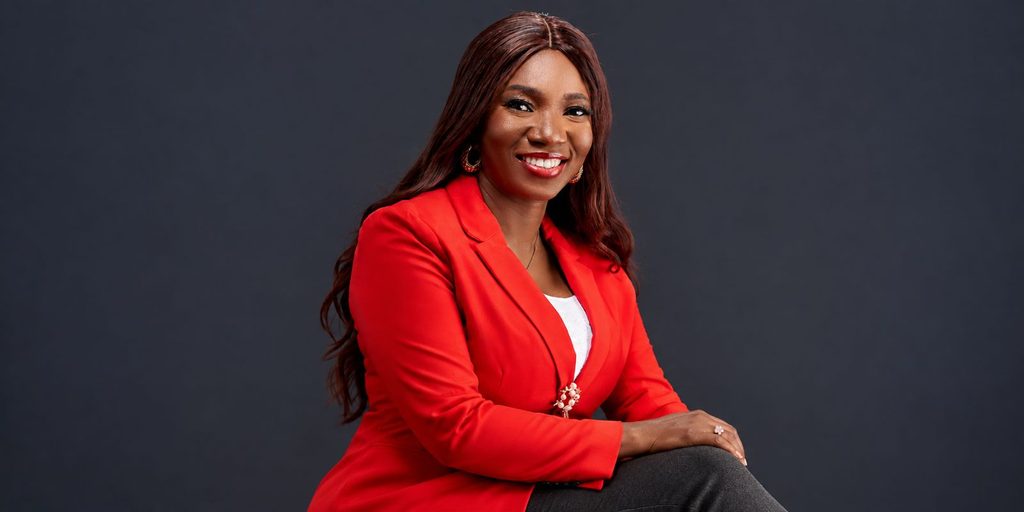
In February 2023, Timi joined WAAW Foundation as Partnerships and Fundraising Manager. By October 2024, she had become its Executive Director, taking on a leadership role in an organisation focused on increasing African girls’ participation in STEM.
The work brings together many of the concerns that have appeared throughout her career: education, access, skills development and the importance of creating opportunities for people to realise their potential.
For girls in STEM, having an interest or the ability to excel is only part of the story. They also need quality learning opportunities, exposure to different careers, support and educational systems that allow them to participate and thrive.
Interest and ability can open a door, but girls need a fair chance to walk through it.
Her commitment to expanding opportunities for women and girls in technology also extends to the Pan-African level. In 2026, Timi participated in a co-creation workshop organised by Smart Africa Rwanda for the development of a Pan-African Mentorship Framework and programme design for women and girls in ICT. I find this particularly relevant because encouraging girls to pursue opportunities in technology is only part of the work. Mentorship can help them navigate the field, learn from the experiences of others and see clearer pathways for their own growth. It is also a reminder that expanding participation requires more than opening doors; it requires creating support systems that help women and girls make the most of the opportunities available to them.
Timi’s work has also extended into policy. In 2024, she was selected to serve on an African Union Commission task force and drafting team involved in developing STISA-2034. In 2026, she led baseline research on girls’ participation in STEM across the six area councils of the Federal Capital Territory, with support from Rise Up Together and in partnership with the Federal Ministry of Innovation, Science and Technology.
These experiences point to the different levels at which opportunity must be addressed. There is the individual girl who needs encouragement and access to learning. There are the schools and communities that shape her experience. And there are the systems and policies that can either expand her options or make it harder for her to pursue them.
What I find especially interesting about Timi’s journey is how far it has moved from her original field of study. She studied Plant Science at Olabisi Onabanjo University before pursuing a Master of Public Health in Health Promotion and Education at the University of Ibadan. Her work has since crossed public health, humanitarian response, education, personal development and STEM advocacy.
It is a reminder that the path we begin with does not always have to determine where we end up. Sometimes, we discover our interests and abilities by doing the work, meeting different people and responding to opportunities as they come. We learn more about what matters to us, and that understanding can take us in directions we did not initially anticipate.
I think there is something worth paying attention to in that willingness to explore, learn and keep growing. We often talk about finding our purpose as though it is a destination we should identify once and then follow without deviation. But sometimes, clarity comes through experience. We understand ourselves better as we try new things, take on responsibilities and discover where our contributions can make a difference.
And there is another kind of strength that deserves attention: the willingness to keep going when life does not turn out as planned.
From the outside, professional journeys can look neat. We see the achievements, the leadership positions, the programmes and the recognition. What we do not always see are the uncertainties, disappointments and difficult decisions that can form part of the journey. We can easily focus on where someone has arrived without considering the patience and persistence it may have taken to keep moving.
I think it is important to make room for that part of the story, too. Not because every disappointment must eventually become a success story, or because every difficult experience has an obvious lesson, but because life rarely moves in a straight line.
I would not want to assume the details of Timi’s private struggles or suggest that every change in her career came from a setback. But looking at the range of experiences she has gathered, I think there is value in considering resilience alongside achievement. Her journey invites us to look beyond where she has arrived and appreciate the willingness to keep learning, adapting and contributing along the way.
For me, Timi’s journey is a reminder that a person’s work is often bigger than their current title. The title tells us where they are now; the experiences behind it help us understand what they have spent their time paying attention to. And sometimes, those experiences also remind us that a meaningful career is not necessarily one in which every step follows the original plan.
What stands out to me is not simply the number of roles Timi has held or the different spaces in which she has worked. It is the opportunity that runs through so much of that work: helping children learn, supporting young people to develop skills, encouraging people to discover their purpose and expanding the possibilities available to girls.
Her work at WAAW Foundation gives that concern a clear focus. By working to increase girls’ participation in STEM, she is helping to address the barriers that can prevent girls from exploring their interests, developing their abilities and considering careers that might otherwise seem out of reach.
Perhaps this is what connects the different parts of her journey. Whether she is working with children in vulnerable communities, engaging young people through public health education, creating space for conversations about purpose or advocating for girls in STEM, the question remains: what becomes possible when people are given the support and opportunity to develop their potential?