Ayomide Moyinoluwa Fatoki: Faith, Writing and a Heart for Social Impact
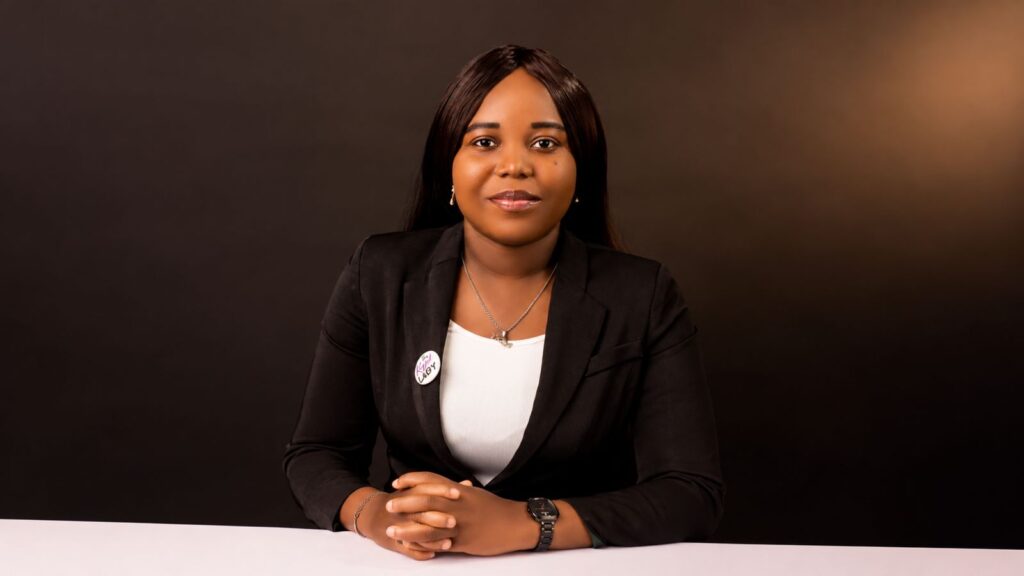
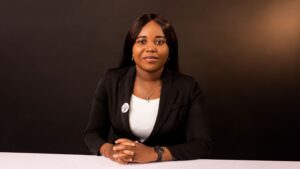
Ayomide Moyinoluwa Fatoki is a development professional, author and Christian whose interests span youth development, gender equity, advocacy and community development. Over the years, she has worked with nonprofit organisations, written books for young people and explored questions of identity, purpose and intentional living.
Looking at her professional life, you would probably place her in the development sector without thinking twice. Add her books and her interest in young people, and you begin to get a sense of the things that matter to her.
But I have learnt that looking closely at people’s lives can be quite interesting. You start with what you know about someone, then stumble upon a detail that makes you pause and look at the person a little differently.
Ayomide’s journey into the development sector began in 2017, when she joined Peace Heritage Foundation in Ibadan as a student intern. There, she encountered the practical side of nonprofit work through stakeholder meetings, advocacy conversations and project implementation. It was an early opportunity to see how ideas about helping people translate into actual programmes and activities.
After completing her National Youth Service Corps programme in 2020, she joined Beyond the Classroom Foundation as an Executive Assistant and virtual community manager. For more than three years, she supported a range of activities, including book distribution, back-to-school initiatives, health and hygiene programmes, volunteer coordination and community engagement.
Having spent those years working behind the scenes of nonprofit programmes, I know there is often much more to an activity than what people eventually see. A photograph might capture children receiving books or participating in a programme, but it rarely tells you about the planning, coordination and many small decisions that made the moment possible.
Ayomide’s subsequent roles exposed her to other aspects of the development sector. At El-Talehs Foundation, she worked as a Programme Coordinator, supporting strategy, team supervision, short courses, webinars and coaching sessions. In August 2023, she joined The Rose of Sharon Foundation as an Administrative Officer. The faith-based organisation supports widows, their children and orphans, and her responsibilities include administrative coordination, beneficiary records and support for welfare and skills-acquisition programmes.
She has also expressed an interest in monitoring, evaluation, accountability and learning, commonly known as MEAL. It is the part of development work that asks us to look beyond the activities we organise and the numbers we report. What changed? What worked? What did we learn? And how do we know that the work made a difference?
But nonprofit work is only one part of Ayomide’s story. There is also the author behind BooksByMide.
Among her published titles are The Girl Code: A Girl’s Guide in Living Her Best Life!, The 360 Degree Teenager and Dear Ayinke. Her writing explores themes relevant to young people as they navigate identity, relationships and the transition into adulthood.
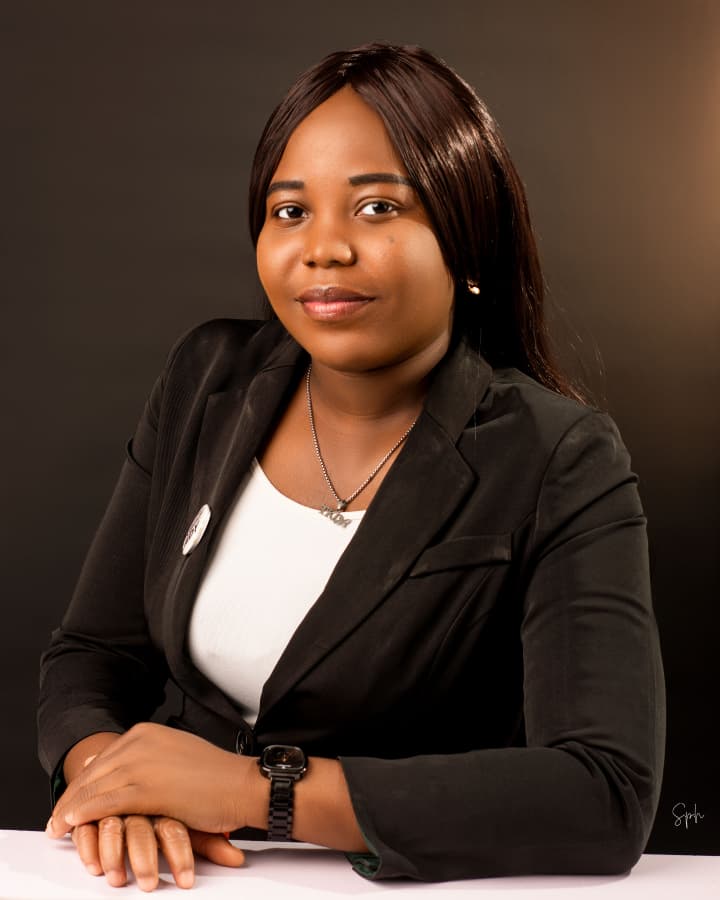
And really, what a time adolescence is. There are questions about who you are, where you belong, what you believe and how you should respond to the expectations of the people around you. Adults sometimes forget how much young people are trying to figure out at once.
Writing for that audience is no small undertaking. You are trying to communicate with readers who are still forming their understanding of themselves and the world around them. A book cannot answer every question a teenager has, but it can introduce an idea, offer another perspective or help a young person find words for something they have struggled to explain.
Ayomide’s interest in young people extends beyond the page. Through youth-focused initiatives, she has been involved in outreach to secondary school students and training around personal development, gender issues, life skills and leadership.
Here, her work as an author and her involvement in development programmes begin to intersect. One takes place through books; the other through direct engagement. Both create room for young people to learn, ask questions and consider the people they are becoming.
Then there is faith.
Ayomide is a Christian, and one of the things that caught my attention was the name she goes by: The Kept Lady. TKL. Her YouTube description reads, “Sustained by HIM who is Eternal!”
I paused at that. There is something about the word kept that makes you want to look a little closer. Here is a woman building a career, writing books, working with young people and exploring different ways to make a difference. Yet, when she chooses a name to describe herself, she points to the One she believes sustains her.
I find that interesting because we often get to know people through what they do. We learn about their jobs, their projects, their ambitions and the things they hope to accomplish. But what holds a person together through all of these things? What shapes how they see themselves, the choices they make and the life they are trying to build?
For Ayomide, her faith is part of that picture. And The Kept Lady offers a glimpse of a side of her that a list of professional achievements might never tell us about.
Now, here is the detail that made me look at her story again.
Ayomide studied agriculture.
Her first degree was in Crop Protection at the Federal University of Agriculture, Abeokuta. In 2025, she completed a master’s degree in Agricultural Extension and Rural Development. Her postgraduate research examined parents’ willingness to support adolescent sexual and reproductive health services in selected local government areas of Oyo State.
Agriculture!
I don’t know about you, but if I had first encountered Ayomide through her books or her work in the nonprofit sector, I might not have guessed that this was her academic background. And it made me curious. How do we get from Crop Protection to writing books for teenagers, coordinating development programmes and exploring questions about young people’s wellbeing?
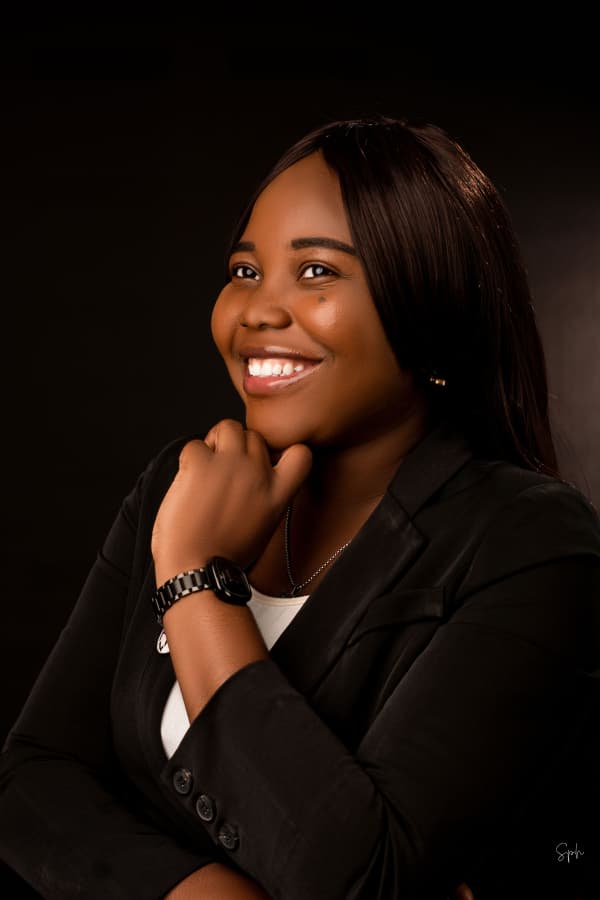
Of course, people change fields all the time. A degree does not have to dictate the rest of your life. But I began to wonder whether we sometimes underestimate the earlier chapters of our journeys simply because our work has taken us somewhere else.
Think about what studying agriculture involves. You learn to pay attention to what you are working with, understand its conditions and recognise that results depend on more than simply wanting something to grow.
Now, look at Ayomide’s work with young people. Think about her books, her involvement in community programmes and her interest in questions affecting adolescents. The fields are different, but I found myself wondering whether they were as disconnected as they first appeared.
After all, working with people also requires attention. You have to understand the people a programme is intended to serve, consider their circumstances and think carefully about what will actually help. You cannot simply assume that because you have designed an intervention, meaningful change will follow.
I found the connection between her academic background and her present work interesting, not because agriculture neatly explains everything Ayomide does today, but because it offers another way of looking at the experiences that have shaped her.
Perhaps that is what I find most interesting about Ayomide’s journey. There is the woman who studied agriculture, the author writing for young people, the Christian reflecting on purpose, and the development professional working behind the scenes to make programmes happen. Each reveals something different about her.
We often feel the need to settle on one version of ourselves, one professional identity, one thing people should know us for. But looking at Ayomide, I am reminded that a woman can have many interests, carry different experiences and find different ways to contribute to the world.
And perhaps the interesting question is not how all these parts fit neatly together, but what happens when we allow them all to find expression.
In Ayomide’s case, I see a woman choosing to serve through the different things she knows, the things she believes in and the work she has chosen to do. Her story is not just about the career she has built or the books she has written. It is also about the many parts of her that have found room to exist, and to contribute.
And I think there is something beautiful about that: a woman who does not have to be just one thing to make a difference.