Boys Lead Foundation Convenes New York Conversation on Boys and the Digital Future At UNGA 81
Boys Lead Foundation convened The New York Boys & Men Conversation in New York City, bringing together leaders and practitioners from across education, technology, family development, mental health and youth development to examine a question becoming increasingly urgent as boys grow up in a rapidly changing digital world: What kind of boys and young men are being formed within the digital environments we are building?
The conversation brought the development of boys and young men into a broader global discussion around the systems shaping their lives. Participants examined the intersection of education, artificial intelligence, digital life, mental health, migration, family systems, belonging and opportunity, while considering what it will take for institutions and sectors to respond to boys in more coordinated and intentional ways.
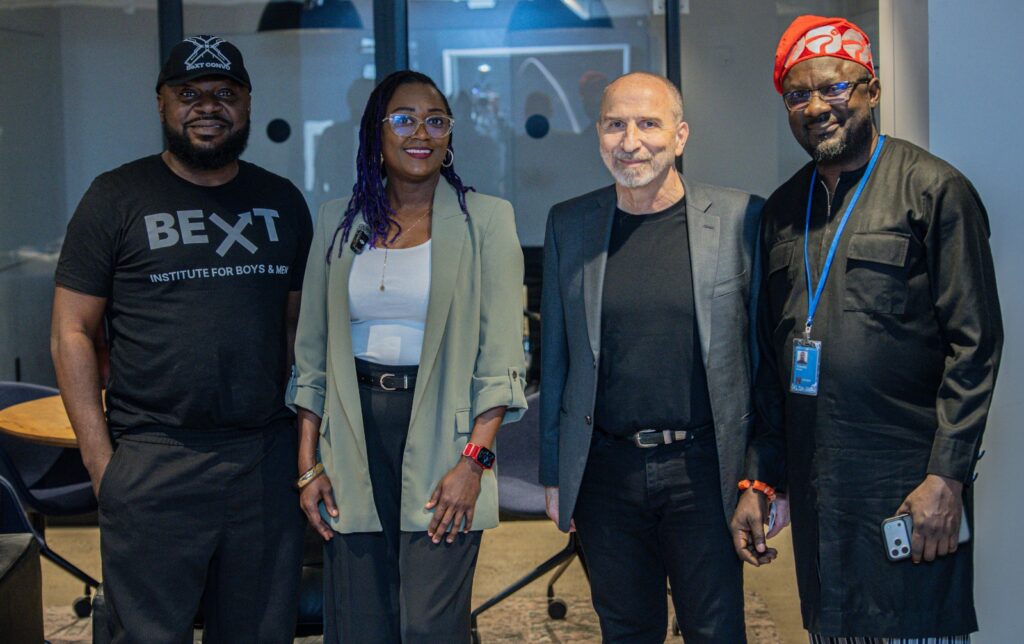
The gathering featured contributions from Owolabi Williams, Praise Fowowe, Modupe Adara, Joe Jones and Stephen Tosh, with Debby Awoyemi serving as moderator.
For Boys Lead Foundation, the conversation forms part of a wider body of work focused on ensuring that boys are not only protected from the challenges around them, but are intentionally equipped with the character, skills, confidence, relationships and opportunities needed to become responsible men and leaders.
“The future of boys cannot be assigned to one sector,” said Owolabi Williams, Founder of Boys Lead Foundation and BEXT Institute for Boys and Men. “Education, technology, families, health systems, employers and public institutions are already shaping boys together. The question is whether we will begin acting together.”
The New York gathering also marked the official launch of Williams’ book, The Boys We Build, The Nations We Become. The book examines the connection between how boys are formed and the kind of men, families, communities and nations they eventually become. It reflects a central idea behind Williams’ work: that the development of boys cannot be separated from the wider systems, relationships and environments in which they grow.
The launch was particularly significant within the context of the New York conversation because the questions raised by the event extended beyond what happens to boys today to what societies are ultimately building through the way they raise, educate, mentor and engage them. As technology and digital environments increasingly influence how young people learn, communicate, form identities and understand the world, the book provides a broader lens for examining the long-term consequences of how boys are formed.
The event builds on Boys Lead Foundation’s growing international work in boys’ development. The organisation has reached more than 20,000 boys and young men across communities in Nigeria, the United States, Canada, the United Kingdom and other locations through mentorship, leadership development, education, character formation, entrepreneurship, skills development and community engagement.
Boys Lead has also developed a wider ecosystem of initiatives around boys and young men, including the Global Boys Summit, the Boypreneur initiative, the Global Boys Development Framework and tools designed to help parents, educators and mentors better understand and support boys.
The New York conversation will now contribute to the development of a proposed Global Commitment on Boys and Young Men and an accompanying Global Action Framework, designed to connect commitments with measurable action across areas including education, technology, health, family, skills, employment, justice and public policy.
Boys Lead Foundation and the BEXT Institute for Boys and Men will begin further consultations with young people, practitioners, researchers, governments, schools, technology leaders, funders and civil society organisations as the framework develops.
The wider ambition is to move the conversation about boys beyond isolated interventions and towards coordinated systems that recognise boys as an important part of the future of families, communities and nations.
More information about The New York Boys & Men Conversation and the emerging New York 2026 Agenda for Boys and Men is available at boyslead.org/new-york-boys-men-conversation-2026.