From Silence to Support: Nigerian Organizations Are Changing How Girls Experience Menstruation
For millions of girls around the world, menstruation is still more than a health issue. It is tied to shame, silence, missed opportunities, and unequal access to education and information.
In Nigeria, many girls still struggle to access sanitary products, safe facilities, and accurate menstrual health education. Some stay home from school during their periods. Others grow up believing menstruation is something to hide or feel embarrassed about.
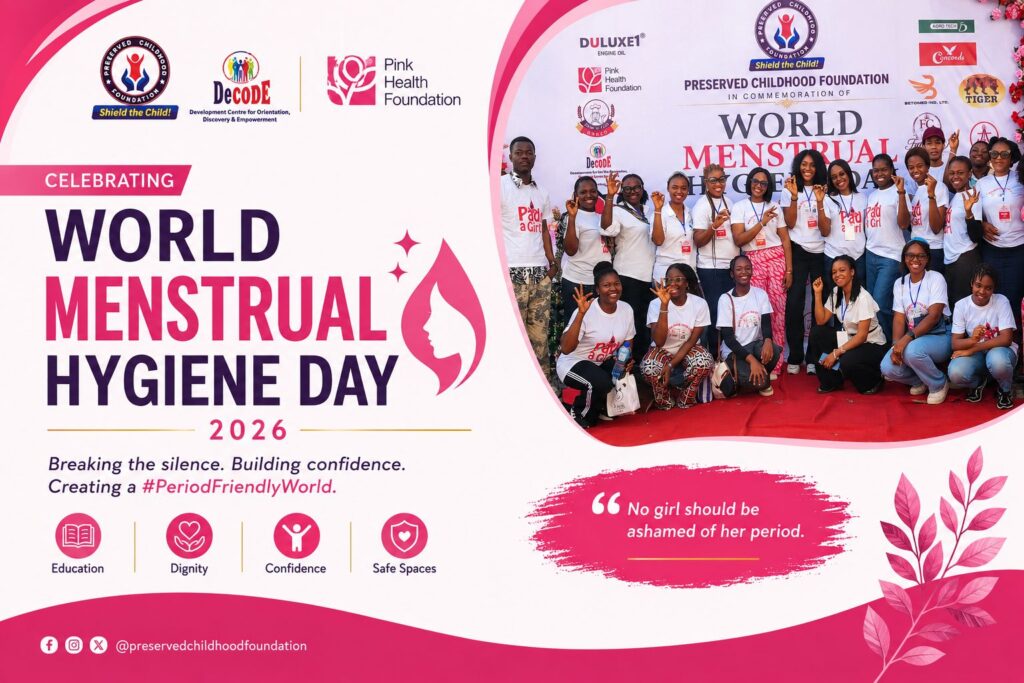
To mark World Menstrual Hygiene Day 2026, DeCODE (Development Centre for Orientation, Discovery & Empowerment), alongside Preserved Childhood Foundation and Pink Health Foundation, organized a menstrual hygiene awareness event in Onitsha focused on education, dignity, inclusion, and creating safer spaces for girls.
The event brought together students, teachers, healthcare professionals, advocates, community leaders, and stakeholders for open conversations around menstruation, puberty, body safety, menstrual hygiene management, and the cultural stigma that continues to affect girls across many communities.
The organizers emphasized that menstruation is a natural biological process and should never stop a girl from learning, participating confidently, or pursuing her goals.
Throughout the event, participants received practical education on:
- Menstrual hygiene and menstrual care
- Understanding the menstrual cycle
- Period tracking and preparedness
- Harmful myths and misconceptions around menstruation
- The importance of Water, Sanitation and Hygiene (WASH) facilities in schools
- The role families, schools, communities, and policymakers play in supporting girls
One of the most powerful moments of the day came from students of the School for the Deaf, who performed a moving mime presentation that reinforced the importance of making menstrual health conversations inclusive for every girl, regardless of disability or background.
Students from different schools also participated in a debate on the topic:
“Should Menstruation Be Discussed Openly or Not?”
While some participants argued from cultural and privacy perspectives, others strongly advocated for more open conversations around menstruation, stressing that silence often fuels shame, stigma, and misinformation. Several students also highlighted the importance of involving boys and men in menstrual health conversations to help create more supportive environments for girls.
The event also introduced PeriodReal, a digital menstrual health platform designed to provide girls with access to trusted information, support, and safe educational resources.
Hon. Mimi Okpeazu, Member representing Onitsha Constituency 1, who attended as Special Guest, encouraged the girls to remain confident, prioritize their future, and never allow menstruation or societal expectations limit their dreams.
Participants also heard from women professionals during a panel session where speakers shared personal stories, career journeys, challenges, and lessons about growth, confidence, and balancing different responsibilities as women.
Speaking during the event, the organizers called for greater investment in menstrual health education, improved access to sanitary products, and better WASH facilities in schools and underserved communities.
As global conversations around menstrual equity continue to grow, local initiatives like this are helping break harmful silence around menstruation while ensuring more girls can manage their periods safely, confidently, and with dignity.
Because no girl should have to choose between her education and her period.