Two Kenyan Women Are Turning Soil Data Into a New Weapon for African Farmers
For farmers, some of the most important decisions begin beneath their feet.
How much fertiliser should be used? Which nutrients does the soil lack? Is a field actually ready for the crop being planted? And could better information about the soil reduce costs while improving productivity?
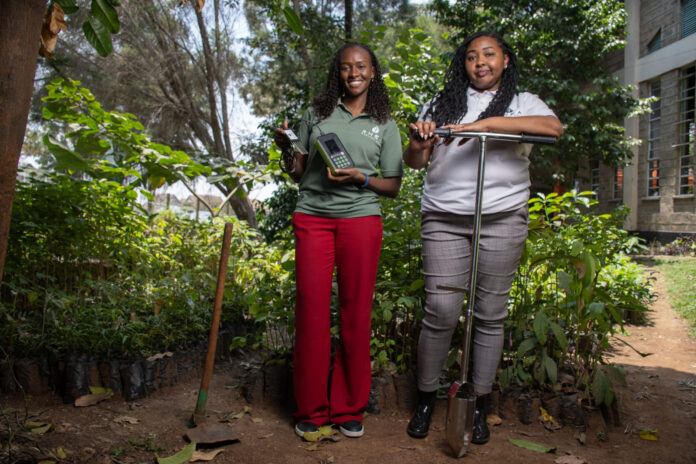
For Priscilla Wakarera and Soinato Leboo, the founders of Kenyan agritech startup Rhea Soil Health Management, answering those questions is becoming a technology opportunity.
Founded in 2022, Rhea has developed the RHEA AgriPad, a portable soil-testing device that combines sensors, software and machine learning to collect and analyse soil information directly in the field.
Now, the company is preparing to take that technology beyond Kenya.
Rhea has secured a $100,000 investment from Obudu Capital through a convertible note, with the new funding tied to a set of ambitious targets: commercialising the AgriPad, deploying 100 devices, reaching 5,000 farmers and expanding into Tanzania.
The investment comes at an important stage for the young company. Rhea is moving beyond developing a promising piece of technology and testing whether soil intelligence can become a scalable business across East Africa.
The problem it is trying to solve is both simple and expensive.
Fertiliser is one of the biggest variable costs for farmers, yet using more fertiliser does not automatically translate into higher yields. Applying too little can restrict crop performance, while applying too much can increase costs without producing a corresponding improvement.
Soil testing can help farmers understand what their land actually needs. But conventional testing often requires samples to be collected, transported to laboratories and processed before farmers receive results and determine what to do next.
Rhea wants to bring more of that process closer to the farm.
The AgriPad is designed to provide portable soil testing, while Rhea’s digital platform processes the information and generates recommendations. The company also uses digital channels such as WhatsApp to deliver agricultural information and advice to farmers.
But the founders have learned that technology alone is not enough.
Wakarera has said the company developed three prototypes over almost two years while working with farmers to understand what they needed and what they could realistically afford.
That process has shaped Rhea’s decision to combine technology with human expertise.
During the first half of 2026, the company recruited and trained 135 agronomist agents across Makueni, Taita Taveta and Kajiado. It also launched the Rhea Agent App to support field operations and introduced Rhea Optima for medium and large-scale farmers, agronomists and laboratories.
The model brings together three elements: the AgriPad collects the information, the software processes it, and agronomists help farmers interpret the results and make decisions relevant to their crops and fields.
That distinction is important because agricultural data only becomes valuable when it changes a decision.
For Rhea, the long-term opportunity could extend well beyond helping farmers decide how much fertiliser to apply.
Every soil test produces information about a particular piece of farmland. Thousands of tests could eventually create a much larger picture of soil conditions, nutrient requirements and agricultural patterns across regions.
That data could potentially have applications in agricultural finance, insurance, carbon markets, input distribution and agricultural development programmes.
Financial institutions could use better farm information to assess agricultural risk. Insurers could gain more insight into farms and potential losses. Input companies could better understand farmers’ needs, while agricultural programmes could use reliable data to measure the effects of their interventions.
Turning that potential into a sustainable commercial model, however, remains one of Rhea’s biggest challenges.
Smallholder farmers operate under tight financial constraints. The cost of soil testing has to compete with spending on seeds, fertiliser, labour and transportation.
For farmers to keep paying for the service, the technology must ultimately demonstrate an economic benefit.
If better soil information helps a farmer avoid unnecessary fertiliser purchases, correct a nutrient deficiency, improve yields or make more efficient use of existing inputs, the value becomes easier to understand.
The $100,000 investment therefore represents more than additional capital for Rhea. It comes with a test of whether the company’s technology can move from promising innovation to repeatable commercial use.
The next major test will be Tanzania.
Rhea’s expansion into Tanzania will require more than simply moving its devices across the border. Soil conditions, crops, farming practices, agricultural systems and regulations vary between markets.
The company will need to demonstrate that its technology can remain consistent while its recommendations and distribution approach adapt to local conditions.
Rhea’s ambitions are also supported by its intellectual-property development. A 2025 patent application published by the Kenya Industrial Property Institute describes a handheld soil-testing kit and system capable of collecting soil nutritional data, incorporating GPS connectivity and transmitting information to a web-based fertiliser recommendation system.
Together, the hardware, software and data infrastructure form the foundation of Rhea’s wider vision.
The company is ultimately betting that soil information can become a valuable layer of Africa’s agricultural economy.
Its immediate customer may be a farmer looking for a better fertiliser decision. But as the database grows, the information could also become useful to agribusinesses, financial institutions, insurers, laboratories and agricultural programmes.
Rhea has already secured $75,000 through Village Capital’s programme backed by Standard Chartered’s Women in Tech initiative. Its latest $100,000 investment gives the company additional resources to pursue its next phase.
The targets are now clearly defined: commercialise the AgriPad, deploy 100 devices, reach 5,000 farmers and begin expansion into Tanzania.
For Wakarera and Leboo, the bigger ambition is to make reliable soil intelligence more accessible to African farmers.
Farmers cannot optimise what they cannot measure.
Rhea’s bet is that by bringing that measurement closer to the farm, combining it with digital technology and connecting it to human expertise, information beneath the soil can become a powerful tool for better decisions above it.