Erica Appiah Is Turning a Student Project Into a New Future for African Farming
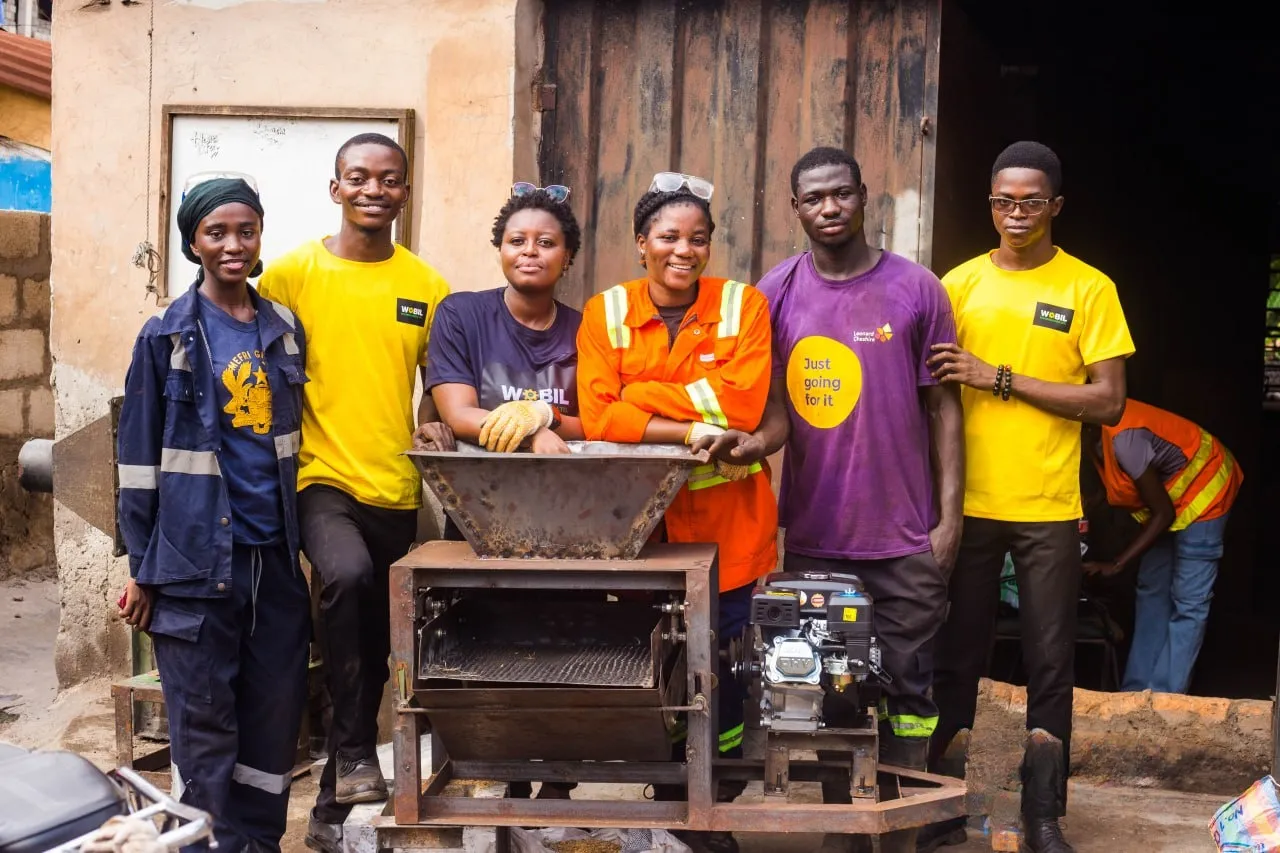
What began as an experiment by two university students has grown into a Ghanaian agritech company developing solar-powered machinery for smallholder farmers.
Erica Appiah and John Wobil founded Wobil Technologies in 2019 while they were undergraduate students at Kwame Nkrumah University of Science and Technology. Their first prototype was a simple wooden, petrol-powered machine built to help farmers thresh rice.
When they demonstrated the machine on a farm in Adansi Asarekrom, the response was immediate. Farmers nearby asked the students to bring the machine to their own farms and offered to pay for the service.
That moment convinced Appiah and Wobil that they had found more than a university project. They had encountered a problem farmers were willing to pay to solve.
For Appiah, the problem was also familiar.
She grew up spending time with her grandmother and great-grandmother, both subsistence farmers, and saw first-hand how physically demanding farming could be. Much of the work, from planting through harvesting and post-harvest processing, was done manually.
Years later, that experience would influence the kind of technology she wanted to build.
Wobil began by speaking directly with farmers, understanding their needs and using that feedback to improve its machinery. Research conducted by the company in 2021 found that farmers across Ghana and other parts of Africa could lose up to 46 per cent of their harvest through manual or delayed threshing, alongside losses in grain quality.
The founders combined those findings with their engineering background to develop their first metal diesel-powered thresher.
The company has since moved into renewable energy, developing a patent-pending Multi-Stage Hybrid Solar-Powered Rice Thresher as well as a solar-powered grain cleaner and winnower designed specifically for African farming conditions.
According to Wobil, its machines can reduce energy costs by more than 70 per cent compared with conventional diesel-powered threshers, while also reducing post-harvest losses and improving grain quality.
The technology is aimed at a significant challenge facing Ghana’s rice sector.
Many farmers are older, with the average age estimated at between 55 and 60 years, while the cost of hiring labour for physically demanding farm work can be prohibitive. At the same time, imported agricultural machinery can cost as much as US$10,000, placing it beyond the reach of many smallholder farmers.
Wobil has responded by developing locally manufactured machinery and offering farmers access through pay-per-use and leasing models rather than requiring them to purchase expensive equipment outright. The company also operates a community-based service and maintenance network.
Since 2021, Wobil says it has served 900 smallholder farmers, processed 1,000 metric tonnes of rice and generated an additional GHS4.7 million, equivalent to about US$420,000, in farmer revenue.
The company has also created 58 direct jobs, while women account for 36 per cent of its paying customers. Appiah wants that figure to reach 50 per cent by 2028.
The company’s grain cleaner and winnower have also received independent validation from the Council for Scientific and Industrial Research-Crops Research Institute under Ghana’s Ministry of Food and Agriculture, with the equipment recording 98 per cent cleaning efficiency.
Wobil’s growth has largely taken place without venture capital. The company has relied primarily on grants, including support from the Standard Chartered Foundation’s Women in Tech Accelerator, implemented in Ghana by the Ghana Climate Innovation Center with support from Village Capital.
For Appiah, the support provided more than funding. The programme offered structured business guidance, mentorship and fundraising preparation that helped the company think more deliberately about its next stage of growth.
The company currently operates in Ghana’s Ashanti and Volta regions but has ambitions to expand into Bono, Northern and Western regions before moving into other West African markets, beginning with Côte d’Ivoire and Nigeria.
That expansion is part of a larger ambition to prove that agricultural technology built in Africa can respond to African conditions.
For Appiah, however, building Wobil has also meant navigating the challenges of being a woman in engineering and agritech.
She was the only woman on the founding team during the company’s early years and has had to navigate both the internal challenges of building a young company and the financial uncertainty that often comes with entrepreneurship.
She has also encountered the assumption that pursuing a conventional job would be safer than building a business.
What has kept her going, she says, has been the farmers themselves and seeing the difference the machines make when they are used in the field.
For her, that experience also carries another significance.
Farmers are sometimes surprised to discover that a woman helped build the machine in front of them. Appiah sees those moments as an opportunity to demonstrate that women can design, build and lead technology companies in sectors traditionally dominated by men.
Wobil’s story offers a different picture of African technology entrepreneurship.
It is not a story centred on an app or a major funding round. It is a story about engineering, agriculture, renewable energy and a willingness to build technology around problems that people experience every day.
It is also a reminder that some of Africa’s most practical innovations can begin in unexpected places — including a university workshop, a wooden prototype and a conversation with a farmer.
What started with two students trying to solve a problem has become a growing business with hundreds of farmers using its technology.
And for Appiah and Wobil, the ambition now extends beyond building machines for Ghana.
They are building toward a future in which African farmers can access agricultural technology designed for their realities, powered by renewable energy and built by people who understand the challenges they are trying to solve.