Lagos Sets Its Sights on Becoming Africa’s Innovation Capital
Lagos is positioning itself for a bigger role in Africa’s technology economy, with the state government highlighting its growing startup ecosystem, expanding digital infrastructure, technology talent and access to venture capital as foundations for its ambition to become one of the continent’s leading innovation centres.
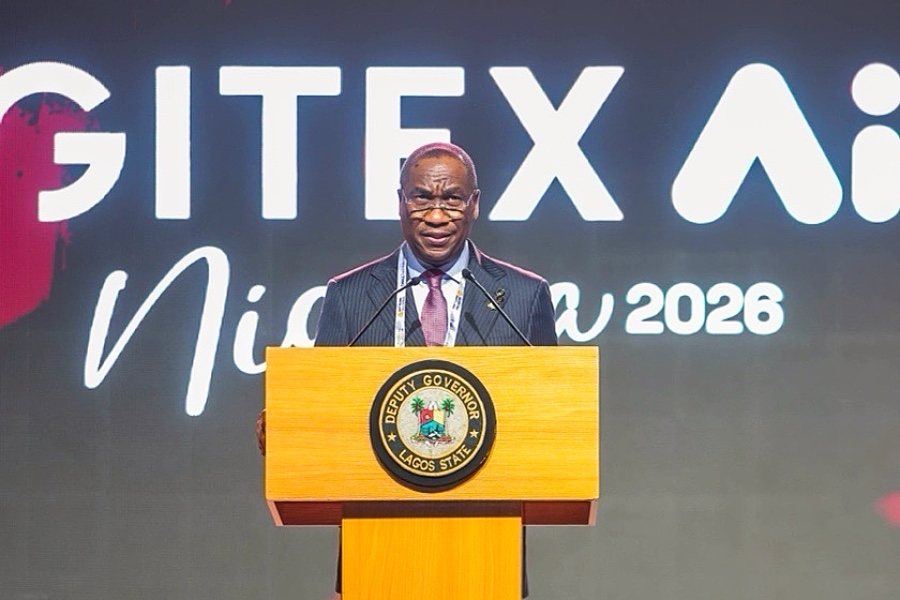
The vision was outlined by the Deputy Governor of Lagos State, Dr Kadri Obafemi Hamzat, during the opening of GITEX Nigeria 2026 in Lagos on Wednesday, September 2.
Representing Governor Babajide Sanwo-Olu, Hamzat said Lagos’ decision to host GITEX Nigeria reflects the city’s growing significance within Africa’s technology and investment landscape.
According to him, Lagos has attracted approximately $3.9 billion in venture funding over the past five years, while its startup ecosystem has an estimated asset value of about $9 billion.
The Deputy Governor said these figures demonstrate that Lagos is no longer simply positioning itself as a potential technology hub. The city has already developed a substantial technology ecosystem and is now focused on building the infrastructure and institutions required to sustain its next phase of growth.
“The future economy is not something Lagos is wanting to jump into, it is something that Lagos has already started.”
Hamzat said the state’s ambition is to be recognised not only as Nigeria’s commercial capital but also as Africa’s innovation capital.
He stressed, however, that such a position cannot be achieved through branding alone.
“It has to be earned through infrastructure, talent, policy and execution,” he said.
One of Lagos’ major priorities is expanding the digital infrastructure required to support businesses, startups and emerging technologies.
Between 2019 and 2025, the state developed approximately 3,000 kilometres of fibre-optic infrastructure, with plans to double the network to 6,000 kilometres.
The state has adopted an open-access approach to the infrastructure, with the aim of reducing repeated excavation of roads by telecommunications operators while making it easier for additional providers to connect businesses and communities.
Hamzat said the infrastructure is intended to strengthen connectivity across Lagos’ major economic corridors and support further investment in the state.
But he acknowledged that connectivity alone is not enough.
Electricity remains one of the most significant infrastructure constraints for businesses operating in Nigeria, particularly technology companies and data-intensive industries.
The Lagos State Government has responded by taking steps to develop a more diversified electricity market, including establishing the Lagos State Electricity Regulatory Commission and expanding the role of independent power providers.
The state is targeting more than 60 megawatts of electricity for its growing computing capacity, while also aiming to achieve 97.5 percent electricity coverage within three years and reduce market losses to below 10 percent.
Hamzat acknowledged that the cost of infrastructure remains significant for businesses but said the state was taking practical steps to address the challenge.
The state is also working to improve how businesses and citizens interact with government.
Hamzat said Lagos is redesigning government processes rather than simply transferring existing paper-based systems online.
The objective is to simplify applications, approvals and interactions across ministries and agencies, reducing the delays that can increase the cost and complexity of doing business.
For investors and technology companies, he said, the efficiency of government processes is an important part of the wider business environment.
“The real strength of Lagos has never been its infrastructure. It is its speed.”
Alongside physical infrastructure, the state is placing greater emphasis on research, innovation and human capital.
The Lagos State Science Research and Innovation Council has supported research projects involving young people across universities in the state, while the Lagos State Employment Trust Fund continues to provide support to businesses and entrepreneurs.
The government is also working towards more dedicated funding mechanisms for research and innovation, alongside fiscal incentives designed to encourage technology-led growth.
Hamzat said Lagos must also develop the capacity to build Artificial Intelligence rather than simply consume technologies developed elsewhere.
“Africa cannot approach transformation as a consumer of technology to build elsewhere. We must become builders.”
For Nigeria, that means developing not only software developers but also the computing infrastructure, data systems, research institutions and commercial pathways required to turn local ideas into globally competitive products.
The Deputy Governor also pointed to opportunities in sectors including financial inclusion, healthcare, cybersecurity and other areas where technology can address large-scale social and economic challenges.
He said these problems cannot be solved by government alone and called for greater collaboration among investors, technology companies, entrepreneurs and public institutions.
The message from Lagos at GITEX Nigeria was therefore broader than a pitch for investment.
The state is presenting itself as a platform where capital, talent, infrastructure, markets and ideas can converge to build solutions not only for Nigeria but for Africa and the wider global market.
With Lagos already attracting significant venture investment and hosting one of sub-Saharan Africa’s largest startup ecosystems, the next challenge is converting that momentum into sustainable companies, deeper innovation capacity and infrastructure capable of supporting the future economy.
As GITEX Nigeria brings global investors, technology companies, startups and policymakers into the Lagos ecosystem, the state is making a clear case for its next ambition:
not simply to be Africa’s biggest commercial city, but to become one of the places where Africa builds its technological future.