Vivien Udeabor: Bringing Human Stories to Life Through Film and Television
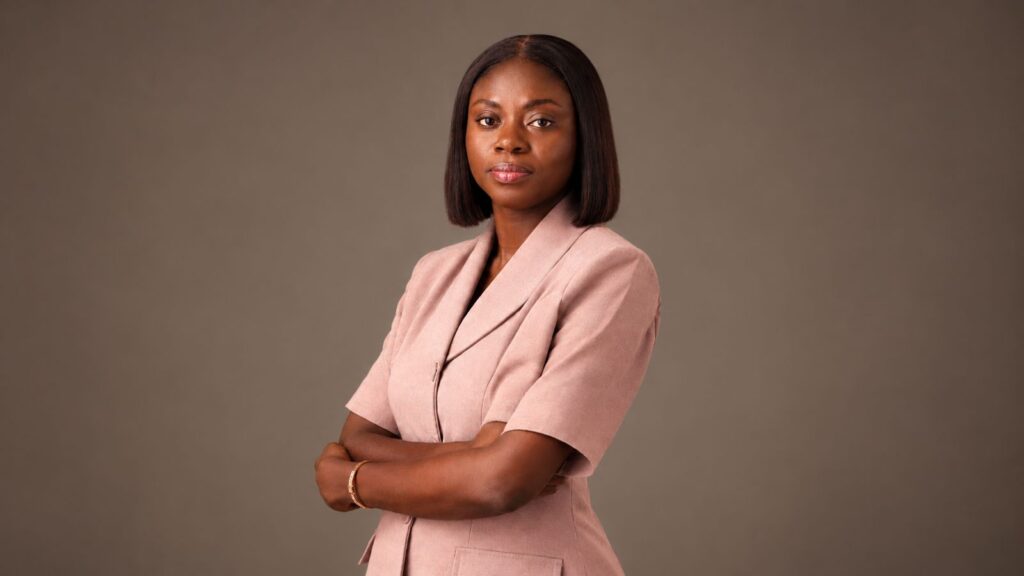
Vivien Udeabor is a Nigerian creative working across stage, film and television, with over a decade of experience bringing stories to life. Her work spans production management, line producing, producing and executive producing, with projects reaching audiences through cinemas, television and streaming platforms. She is the founder of Ubuntu Visuals Limited, a production company built around her passion for authentic, human-centred storytelling.
Beyond the productions she brings to the screen, Vivien is interested in the people behind the stories, the experiences that connect us, and the power of storytelling to help us understand ourselves and one another. From her early days writing stories and publishing a magazine to producing large-scale television series and exploring fiction writing, her journey reflects a commitment to learning, growth and creative expression.
In this interview with Ripple Africa (RA), we sat down with Vivien to discuss her journey into film and television production, the experiences that have shaped her career, the realities of bringing creative visions to life, and her vision for Ubuntu Visuals Limited. She also shares her thoughts on the future of the Nigerian film industry, her debut novel, A Woman Like Me, and the kind of legacy she hopes to build through storytelling.
RA: For those meeting you for the first time, who is Vivien Udeabor, and what should we know about the woman behind the work?
Vivien: I am a Nigerian creative in the stage, film and television industry, with over a decade of experience telling stories. I have worked across different stages of production, from managing productions and coordinating teams to producing and executive producing projects that have reached audiences through cinemas, television and streaming platforms.
Beyond the work, I am interested in people, our shared experiences, and the things that connect us as human beings. I believe stories have the power to help us understand ourselves and one another better. I am driven by a desire to create meaningful work and tell stories that people can see themselves in. I am still growing into the person and professional I want to become, and I find my growth journey as important as the work itself.
RA: How did your journey into film and television production begin? Was there a particular moment when you knew this was the career you wanted to pursue?
Vivien: My journey into storytelling began before stage, film and television production became my profession. I have always been drawn to stories and the different ways they can be brought to life. As a child, I rewrote my notebooks, wrote stories, invented stories and created story worlds. I didn’t have a name for it then, but I enjoyed it.
For a season in my life, I was the publisher of a magazine called Pathfinders, all in a bid to tell stories and share them with the world. All of these experiences led me to work behind the scenes on stage productions. This led to writing and producing stage plays, which, in turn, led me to film and television. After writing and directing the stage play Whispers to M, I knew I had found my place in the storytelling world.
Film and television productions introduced me to the scale, structure and collaboration required to take an idea from conception to the audience. I discovered that I was interested not only in the stories but also in everything that makes them possible: bringing people together, organising resources, solving problems and seeing a creative vision through to completion.
RA: You have spent over a decade in the industry, working across different aspects of production. What were the early years like, and how did you find your footing in such a demanding field?
Vivien: The early years were a learning curve. I took every opportunity I got to be part of a stage or film set. I worked across set dressing, props handling, costume sorting and other departments on stage sets.
My first experience on a film set was as a production runner, basically an errand girl. I used the opportunity to observe other departments, and I continued doing this in my early years. From the start, I knew I wanted to write and produce, so while I worked in other departments, I kept learning and studying to become a producer.
The film and television industry is a place where you learn a great deal by doing the work, observing, taking responsibility and figuring things out as you go, sometimes under pressure. Every project brings its own challenges, and you quickly learn that being passionate about storytelling is only one part of what it takes to succeed.
I continue to find my footing by being willing to learn and take on responsibilities. I have learnt that the more time I take to prepare for a project, the fewer challenges I have to deal with during the shoot. I have learnt to pay attention to detail, manage people and resources, anticipate challenges that might cost us shooting time, and remain focused on the bigger picture.
RA: Every career has moments that change its direction. What experience has had the greatest influence on your growth as a producer?
Vivien: One of the most significant parts of my growth has been working on projects that required me to take responsibility for large teams, complex schedules, large budgets and the delivery of the production.
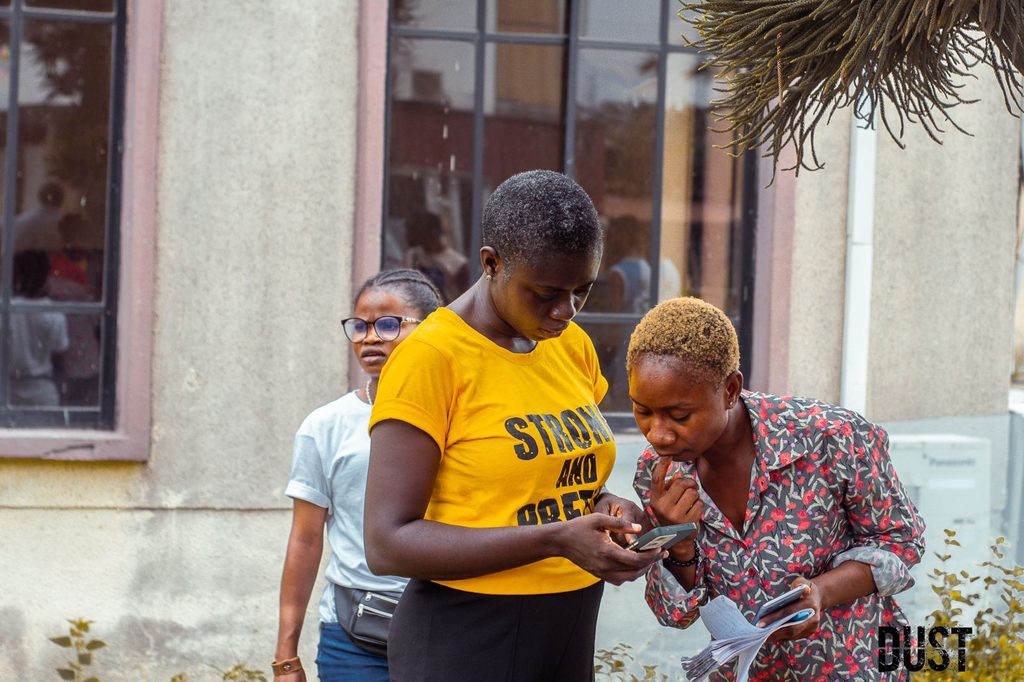
Producing Venge, a 260-episode television series; Dust, a 130-episode television series; and Suspicion, a feature film for a major streaming platform, contributed to my experience in different ways. But Venge has had the greatest influence on my growth so far.
Venge was my first producing credit and the largest cast and crew I had ever been in charge of. I had the best team working alongside me to bring Venge to the audience. Venge was my rodeo. I was thrown into the deep end and had to learn to swim while working.
These experiences have helped me understand the kind of producer I am: a producer who protects the creative vision while understanding the practical realities of bringing a story to life.
RA: Film production requires both creative vision and the ability to manage people, resources and pressure. What has been the hardest lesson you have learned about bringing a project to life?
Vivien: Production is as much about managing people and expectations as it is about managing schedules and budgets. One of the hardest lessons I learnt is that a good story and preparation are not enough to make a successful production.
You need the right people, clear communication and the ability to adapt when things do not go as planned. A creative vision comes to life through the right team collaborating, discipline and the willingness to make difficult decisions. You must also understand that every decision has consequences, and a producer must be willing to take responsibility for those decisions.
RA: You founded Ubuntu Visuals Limited with a commitment to authentic, human-centred storytelling. What inspired you to build the company, and what do you want it to stand for?
Vivien: I founded Ubuntu Visuals Limited in 2023 because I wanted to build something that reflects my vision for storytelling and the kind of creative work I want to contribute to the world.
The idea behind Ubuntu is rooted in human connection. I believe stories should create lasting impressions, open up conversations and help us recognise parts of ourselves in other people. That belief is central to the kind of work we produce through Ubuntu Visuals Limited.
We are at the stage of building our slate of films, strengthening our capacity and creating opportunities for meaningful collaborations. I want to build a creative powerhouse, a company that produces work with authenticity, builds strong partnerships and contributes meaningfully to the stage, film and television industry.
RA: Your work has reached audiences through streaming platforms and cinemas. How do you decide which stories are worth telling, and what makes a story stay with an audience long after the credits roll?
Vivien: I decide a story is worth telling when there is something meaningful at its centre. It could be an experience, a question or a shift in perspective that invites people to look at life differently after watching the film.
I believe a story should offer more than entertainment alone. It can challenge our assumptions, create empathy and provoke conversation, not necessarily because it has all the answers, but because it leaves the audience with something to think or feel about, or makes them feel less alone in an experience.
These are the kinds of stories and themes that stay with a person after the credits roll.
RA: You are now exploring a different side of storytelling with your debut novel, A Woman Like Me. What inspired you to write it, and what does this new chapter reveal about you as a storyteller?
Vivien: This chapter is really a reconnection with my earlier days of writing prose. It is an expansion of my creative expression, a reminder that storytelling is not limited to one medium and that there are different ways to explore human experiences.
Stage, film and television require me to think about how a story will be translated into performance, moving images, sound and a collective creative vision. Writing offers me a different kind of space: an opportunity to explore characters through their words, thoughts and emotions, and to create layers within their inner worlds.
RA: What do you believe needs to change in the Nigerian film industry to create better opportunities for producers and other professionals behind the scenes?
Vivien: We need to build structures that allow creative professionals to build sustainable careers, not just participate in individual independent productions.
We need better financing structures, opportunities for independent producers to develop and make projects, better access to distribution, and partnerships that allow our productions to reach wider audiences.
We also need more collaboration across borders, with partnerships built on shared value, respect for creative ownership and a genuine commitment to making better films.
Building sustainable production companies is important, too. Producers need opportunities to build businesses, develop intellectual property, create slates of productions and plan beyond a single project. When the focus is only on getting the next production made, it becomes difficult to invest in long-term growth and build a sustainable industry.
RA: As you reflect on your journey so far, what are you still working towards, and what kind of legacy do you hope to leave through the stories you tell?
Vivien: I am working towards building a body of work that reflects the kinds of stories I believe in and building Ubuntu Visuals Limited into the kind of production company I envision.
I intend to continue growing as a producer, take on more ambitious projects, develop meaningful partnerships and create opportunities to tell stories that travel across cultures, extending the reach of the stories I produce.
My work in stage, film and television, and my experience writing A Woman Like Me, remind me that there is always room to learn, experiment, grow and discover new possibilities.
I want to continue contributing to the creative industry by doing meaningful work, where the people working behind the scenes are valued and paid sustainable wages, while giving stories the opportunity to reach their full potential.
I hope to leave behind a body of work that connects us to one another. I want the stories I help bring to life to make people feel seen, encourage reflection and create lasting human connections. I also hope to build something through Ubuntu Visuals that continues to do that long after I am no longer the person leading it.